This may seem trivial, but it is actually more crucial than you might think when writing to an inmate. The kinds of pen, pencil or paper you use to write to an inmate matter more than you might think.
This may seem strange to you, but letters actually get rejected for using the wrong type of pen, sending inappropriate paper, or including well-meaning extras that violate facility policies.
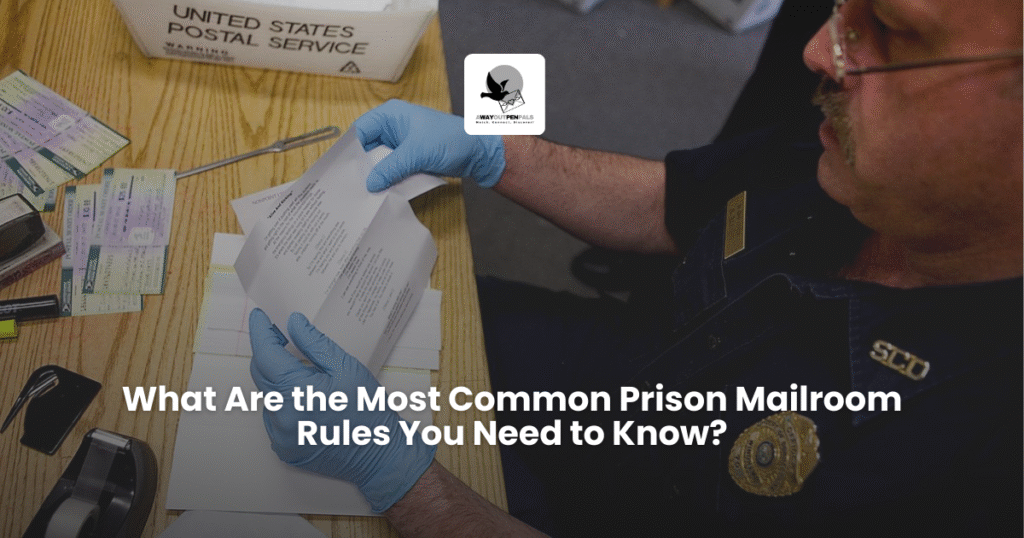
According to the Federal Bureau of Prisons mail policy, mail screening is a critical security measure designed to prevent contraband from entering institutions, which is why these rules exist in the first place.
Whether you’re looking to find a prison pen pals or maintain contact with someone already incarcerated, this guide will walk you through everything you need to know about the materials you can and can’t use when writing to an inmate.
Best Pens and Paper Types That Are Mailroom-Approved
Let’s start with the basics. pens and paper!
You might think this is straightforward, but mailroom regulations can be surprisingly specific. The primary concern for correctional facilities is security.
They need to prevent drugs, weapons, or other contraband from being smuggled inside through seemingly innocent mail.
What kind of pens are allowed to write a prisoner? Most facilities require you to use basic ballpoint pens with black or blue ink. Here’s what typically works:
- Standard ballpoint pens (Bic, Papermate, or similar brands)
- Black or dark blue ink only
- Avoid gel pens, felt-tip markers, or anything with removable parts
- Never use pens that could be disassembled into potential weapons
As for paper, plain white lined or unlined paper is your safest bet. Stay away from anything that could raise red flags:
- No cardstock or heavy paper that could hide contraband
- Avoid scented paper or stationery (chemicals can be used to smuggle drugs)
- No colored paper in some facilities
- Standard notebook or printer paper works best
- Keep it simple—one or two sheets per letter
The National Institute of Justice has documented how synthetic drugs can be liquified and sprayed onto paper products, including mail, which explains why many facilities have become increasingly restrictive about paper types. These substances are responsible for contributing to overdoses and deaths in the prison system, with some states seeing dramatic increases in prison overdoses in recent years.
Writing Letters to Inmates: Typed vs. Handwritten Formats
This is a question many pen pals wonder about: Is it better to type or handwrite when you write to an inmate?
Both formats have their advantages, and the answer often depends on the specific facility and the relationship you have with the person you’re writing to.
Handwritten letters carry a personal touch, which feels more intimate and shows you took the time to sit down and craft something specifically for them. Many inmates appreciate this personal connection, especially since incarceration can feel isolating.
However, handwritten letters come with challenges:
- Your handwriting must be legible (mailroom staff need to read it for security)
- They take longer to write, especially if you want to say a lot
- Corrections can be messy
Typed letters are perfectly acceptable in most facilities and offer their own benefits:
- They’re easier to read for both mailroom staff and recipients
- You can write more in less space
- They look professional and organized
- You can keep digital copies for your records
Some facilities have moved toward accepting only digital mail or scanned copies of letters, which are then printed and delivered to inmates. According to the Prison Policy Initiative’s research on mail scanning, at least 25 state prison systems now photocopy incoming mail, along with the Bureau of Prisons who scans mail in institutions other than minimum-security facilities.
If you write to an inmate regularly, consider alternating between handwritten notes for shorter, personal messages and typed letters when you have more to share. The most important thing is that your correspondence gets through and provides meaningful connection.
Why Some Facilities Only Allow Postcards and How to Write Them
You might be surprised to learn that some correctional institutions restrict correspondence to postcards only.
If you’re trying to find prison pen pals or maintain existing relationships, understanding this policy is essential.
Why do some facilities only allow postcards for prison pen pals? The reasoning comes down to security and efficiency:
- Postcards are easier and faster to screen (no envelopes to open)
- There’s nowhere to hide contraband
- Mail processing staff can quickly scan both sides
- It reduces the time and labor costs associated with mail inspection
- Less surface area means fewer opportunities for drug-infused paper
This policy has become more common as facilities deal with the influx of synthetic drugs that can be absorbed into paper. The Prison Policy Initiative documented how jails in at least 13 states like Arizona, California, Colorado, Florida, Georgia, Kentucky, Kansas, Michigan, Missouri, Oregon, Tennessee, Utah, and Washington have implemented postcard-only restrictions on incoming and outgoing mail.
When writing postcards to inmates, keep these tips in mind:
- Write clearly and concisely because space is limited
- Use both sides if allowed by the facility
- Stick to positive, uplifting messages
- Avoid discussing facility operations or other inmates
- Remember that postcards are not private—staff and potentially other inmates can read them
- Include your return address clearly so they can write back
Postcards may feel restrictive, but they ensure your message gets through reliably. Focus on quality over quantity; a short, heartfelt message can mean just as much as a long letter.
Don’t forget to check out: What to Say in Your First Letter to an Inmate (Simple Examples+Template)
Can You Send Drawings or Sketches Within a Letter to an Inmate?
Can inmates receive original drawings in the mail?
Good question!
The answer varies significantly by facility.
Some institutions allow simple drawings or sketches, while others prohibit them entirely. Here’s what you need to know:
Facilities that allow drawings typically require:
- Simple pencil or pen sketches only
- Nothing that could be interpreted as gang-related symbols or codes
- No elaborate artwork that could hide messages or contraband
- Drawings must be on standard paper, not separate art paper
- The entire letter, including drawings, must be easily scannable
Why some facilities prohibit drawings:
- Complex images can conceal coded messages
- Layered artwork could hide contraband
- Certain symbols might have gang affiliations
- Artwork requires more scrutiny during mail screening
Research from the National Institute of Justice found that contraband negatively affects the safety and security of correctional institutions, and visual materials can be a vector for smuggling. Lower security prisons, prisons providing substance use treatment, and those employing more women staff had fewer contraband drugs, weapons, and cellphones.
If you want to include a drawing when you write to an inmate, follow these guidelines:
- Keep it simple. A small doodle or quick sketch
- Avoid anything that could be misinterpreted
- Draw directly on your letter paper, not on a separate sheet
- Use the same pen you’re using to write
- Never send professional artwork, printed images, or anything laminated
Children’s drawings for incarcerated parents often receive more leniency, but even these should be simple crayon or marker drawings on regular paper. Many facilities understand the importance of maintaining family connections and make reasonable accommodations.
When in doubt, contact the facility’s mailroom directly before sending anything beyond a basic letter. Every institution has specific mail policies available through the Electronic Code of Federal Regulations, and what’s acceptable at one prison might be prohibited at another.
Final Word
Writing to someone in prison is an act of compassion that can profoundly impact both the sender and the recipient. While the restrictions on materials might seem frustrating, they exist to maintain safety and security within correctional facilities. By following the guidelines outlined here; using approved pens and paper, choosing between typed and handwritten formats thoughtfully, understanding postcard policies, and being cautious with drawings, you can ensure your letters reach their destination and provide meaningful connection.
The Prison Policy Initiative emphasizes that postal mail is a critically important method of communication for incarcerated people, who rely on paper-based mail for activities many take for granted. Despite increasingly restrictive policies, maintaining these connections remains vital for the well-being of incarcerated individuals and their eventual successful reentry into society.
Connect with an inmate today through Away Out Pen Pals
FAQ
Q: Can I use colored pens when I write to a prisoner?
A: Most facilities only allow black or blue ballpoint pens. Colored pens are typically prohibited due to security concerns.
Q: How long does it take for my letter to reach an inmate?
A: Mail processing times vary by facility but typically range from 3-10 days, depending on the institution’s screening procedures.
Q: Can I include photos in my letter to inmates?
A: Most facilities allow a limited number of photos (usually 3-5), but they must meet specific requirements: no Polaroids, no nudity, no gang symbols, and they should be printed on photo paper, not regular printer paper.
Q: Are there specific rules about envelope types?
A: Yes, use standard white or manila envelopes. Avoid padded envelopes, large envelopes, or anything with excessive decoration. Clear return and recipient addresses are essential.
Q: Can I send greeting cards to someone in prison?
A: Policies vary, but many facilities allow flat greeting cards without music chips, glitter, ribbons, or pop-up elements. Always check the facility’s specific mail policy first.