| Sending a kind letter to an inmate is a noble act, but you must also take into consideration your own safety.
There are certain protocols you must follow if you are new to the world of prison penpals. While the vast majority of incarcerated individuals are simply looking for a connection to the outside world, it is vital to prioritize your security. As they say, you never know what you might run into. Therefore, it is not a good idea to share too much when writing to an inmate. |
According to a user on Quora, you must only share details like your name and address, only if they are your loved ones. Otherwise, it’s better not to do so.
In this guide, you will learn:
|
Benefits of Using a PO Box or Virtual Mailbox
It might be tempting for you to approach an inmate directly and give them your best regards.
However, that isn’t possible for obvious reasons, and prison systems don’t allow it. This is where a PO Box or a Virtual Mailbox comes in.
Using a PO Box or virtual mailbox provides a secure, anonymous buffer that fulfills prison return-address requirements while keeping your actual home location hidden from inmates and facility staff.
Using a PO Box for Inmates
A Post Office (PO) Box is a traditional and highly reliable method for maintaining anonymity. By using a PO Box, you ensure that the inmate and anyone else who might see the envelope (such as correctional officers or other inmates) do not know where you live.
- Anonymity: Your physical residence remains hidden, preventing any unsolicited visits upon an inmate’s release.
- Security: PO Boxes are located inside secure United States Postal Service (USPS) facilities.
- Consistency: If you move house, your PO Box address remains the same, ensuring no lapse in communication.
Using a Virtual Mailbox for Jail
A virtual mailbox for jail correspondence is a modern alternative to the physical PO Box. These services provide you with a physical mailing address where your mail is received, scanned, and uploaded to a secure digital portal for you to read.
- Complete Physical Distance: You never have to handle physical paper mail from the facility if you choose a digital-only plan.
- Mail Forwarding: If you wish to receive a physical item (like artwork), the service can forward it to you without revealing your home address to the sender.
- Global Access: You can manage your inmate correspondence from any smartphone or computer, making it the best virtual mailbox for inmate mail for those who travel frequently.
The USPS Privacy Policy outlines that personal information associated with a PO Box is protected under the federal Privacy Act. This ensures that your physical location is not shared with third parties or the recipient of the mail unless required by law enforcement for a specific investigation.
Setting Emotional and Physical Boundaries Early On
Most people don’t understand this, sadly.
However, this bit cannot be overlooked when writing to an inmate.
Setting emotional and physical boundaries early on prevents the development of unrealistic expectations and manipulation while ensuring the relationship remains a healthy, safe, and controlled interaction for both parties.
Establishing Physical Boundaries
You must decide early on what level of contact you are comfortable with beyond written letters.
- No Home Address: State clearly that you use a secondary mailing address for all correspondence.
- Phone Calls: Decide if you are willing to accept collect calls. If you are, consider using a secondary VOIP number (like Google Voice) rather than your personal cell phone number.
- Visitation: Do not feel pressured to visit. Many penpals communicate for years without ever meeting in person.
Establishing Emotional Boundaries
Incarcerated individuals often experience intense loneliness, which can lead to accelerated emotional intimacy.
- Frequency of Writing: Set a schedule (e.g., once a week or twice a month) and stick to it so the recipient doesn’t develop unrealistic expectations.
- Financial Requests: It is a standard rule in the penpal community: never send money to someone you have just met. If an inmate asks for money for “canteen” or “phone time” early on, it is a red flag.
- Romantic Intentions: If you are only looking for friendship, state this in your very first letter to avoid misunderstandings.
Criminological research suggests that healthy relationships are based on “dynamic security” interactions rooted in fairness and respect rather than secrets. The Washington Department of Corrections guidelines for volunteers and penpals state that withholding personal details (financial status, family issues, or residence) is a “best practice” that actually earns more respect from the incarcerated individual because it sets a tone of professional stability.
Understanding What Personal Information is Safe to Share
People often ask “Is it safe to write to an inmate?”
The answer to this question depends largely on the sender. Information that seems mundane to you can be used to track your location or identity in the digital age.
So, please be careful!
Safe Information to Share
- First Name or Alias: You do not need to use your full legal name in every letter.
- General Interests: Hobbies, books, movies, and general life philosophies are excellent topics for building a connection.
- General Geographic Region: Mentioning your state or a large nearby city is generally safe, provided you don’t provide specific landmarks near your home.
Information to Keep Private
- Full Name and Employer: Avoid mentioning where you work, as a simple LinkedIn search can reveal your identity and location.
- Financial Status: Never discuss your income, the value of your home, or your financial assets.
- Family Details: Avoid sharing the full names or specific locations of children, spouses, or parents.
- Specific Daily Routines: Do not mention specific gyms, parks, or shops you frequent at specific times.
How to Use an Inmate Penpal Service’s Privacy Features
Use an inmate penpal service’s privacy features by leveraging “email-to-print” messaging and address-masking profiles to communicate through the platform’s secure servers rather than your personal contact methods.
- Internal Messaging Systems: Many services offer an “email-to-print” feature. You type your message on the website, and the service prints and mails it for you, often using their own return address.
- Profile Masking: When you create a profile to be found by inmates, you can choose what information is public. Use a pseudonym if the site allows it.
- Blocking Features: If a correspondence becomes uncomfortable or aggressive, these platforms allow you to “block” or report the inmate, which can lead to them being removed from the service.
- Direct Mail Handling: Some premium services offer a “forwarding” feature where they act as a middleman, receiving the inmate’s mail and sending it to you so your address is never exposed.
For more information, please check out this blog.
Can I Use a PO Box to Write to a Prisoner? (Logistics and Rules)
This is another commonly askd question.
The short answer is yes!
In fact, it is the most recommended method by experts. However, there are specific rules regarding sending mail to jail without a return address.
- Return Address Requirement: Almost all prisons will discard mail that does not have a return address. You should put your PO Box address in the top left corner of the envelope and at the top of the letter itself.
- Format: Use the format: Your Name, PO Box [Number], City, State, Zip Code.
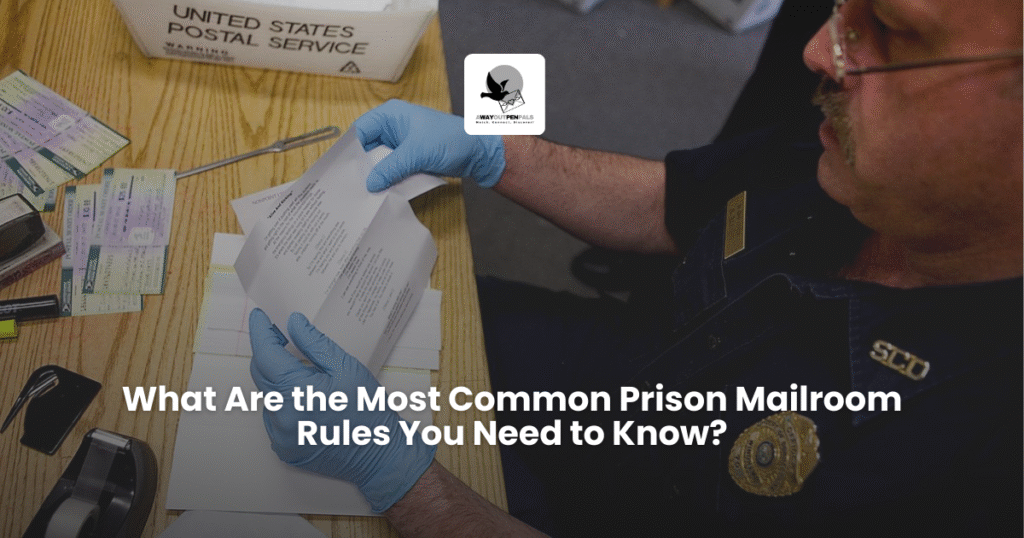
- Content Restrictions: Ensure your mail does not contain “contraband” (stickers, glitter, perfume, or staples), as this will cause the mail to be rejected, regardless of the return address used.
Research from the National Institute of Justice (NIJ) on managing contraband explains why “clean” mail (no stickers, glitter, or tape) is required. Many facilities are shifting to digitized mail services to stop drugs from entering via paper. Using a PO Box or virtual service aligns with these security trends by providing a documented, professional-looking return path that is less likely to be flagged during the initial mail-room screening.
Conclusion
Writing to an inmate provides a vital bridge to society for those who are incarcerated, but it should never come at the expense of your peace of mind. By utilizing a PO Box or a virtual mailbox, setting firm boundaries from day one, and being selective about the personal details you share, you can enjoy a safe and fulfilling correspondence. Taking these precautions allows you to focus on the human connection rather than worrying about your personal security.
If you are ready to start a meaningful connection with someone who would truly appreciate your time and words, visit our platform to browse profiles.
If you want to send a letter to an inmate, A Way Out Pen Pals is the place for you.
Frequently Asked Questions
Q: Can I write to an inmate without using my real name?
A: Yes. Many penpals use a nickname or just their first name. However, the return address on the envelope must be valid for the mail to be delivered.
Q: Do inmates see the return address?
A: Yes. In most facilities, the inmate receives the original envelope or a photocopy of it. This is why using a PO Box or virtual mailbox is essential for privacy.
Q: Can I send photos to an inmate without revealing my location?
A: Yes, but be careful of “metadata” in digital photos and background landmarks in physical ones. Use a service that prints photos for you to ensure no hidden data is shared.
Q: What is the safest way to send money to an inmate?
A: If you choose to send money after establishing a long-term trust, use official channels like JPay, Access Corrections, or Western Union. Never send cash or personal checks.