| Writing a letter to someone behind bars is one of the most selfless acts of kindness you can perform. For an incarcerated person, “Mail Call” is the highlight of the day, providing a rare moment of connection to the world beyond the razor wire. However, the prison mailroom is not like the outside world. Every envelope is a potential security risk in the eyes of the state, and a single mistake can lead to your letter being shredded or your loved one being disciplined.If you are writing to inmates for the first time, you might feel a mix of anxiety and uncertainty. What is appropriate? What is forbidden? How do you strike the right balance between being supportive and staying safe? This guide will navigate the complex rules of correctional facilities and help you master the art of the inmate support letter. Things to Expect in This Guide:
|
Thankfully, there aren’t a lot.
The list of “things not to write in a letter to an inmate” is a short one. Let’s start with the basics.
According to a former inmate on Quora (and a lot of former inmates in agreement), |
What Not to Say in a Letter to an Inmate
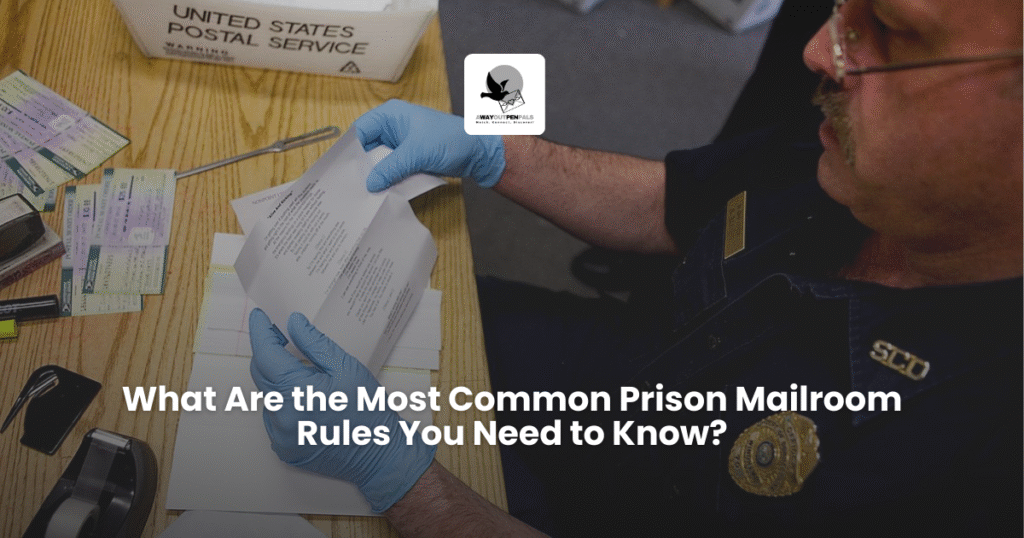
The most important rule of prison correspondence is this: Assume a corrections officer is reading every word. Privacy does not exist in the mailroom. To keep yourself and the inmate safe, avoid these specific topics.
1. Details of the Crime or Legal Strategy
Never ask an inmate to “tell the truth” about what happened or discuss details of their ongoing case. Standard mail is not protected by the attorney-client privilege. Anything you write, or they write back, can be seized and used as evidence. Even if you think you are helping by discussing a witness or a piece of evidence, you could inadvertently harm their legal standing.
2. Coded Language and Slang
Even if you have “inside jokes,” avoid using language that could be interpreted as code.
A Quora thread from a pen pal details how these “inside jokes” lead up to letter confiscation, which causes frustration on both sides in an already complicated situation.
Prison staff look for signs of gang activity, drug transactions, or escape plans. Using mysterious nicknames or cryptic phrases will get your letter flagged. Keep your language plain, direct, and transparent.
3. Complaints About Prison Staff
Try not to talk ill about the prison staff. While it may be harmless, no one is really gaining anything from such a gesture. Therefore, it’s better to steer clear.
4. Plans for Illegal Activity
This seems obvious, but it bears repeating. Never discuss drugs, “hustles,” or anything that violates facility rules. Even discussing a “small” rule-breaking act (like how to sneak in a forbidden item) can lead to the inmate losing their mail privileges or being moved to solitary confinement.
5. Overly Emotional or Stressful News
While inmates live in high-stress environments where they cannot control outside events, many former prisoners emphasize that they prefer the truth “straight like it is” to maintain a sense of normalcy and inclusion. Use your judgment based on your specific relationship: if you know the person well, you likely know how much they can handle. The goal is to balance honest transparency with the need to avoid causing unnecessary feelings of helplessness.
What Do You Say to Encourage an Inmate?
Once you know what to avoid, you might wonder: What can I put in a letter to an inmate that actually helps? Encouragement is about providing a mental escape and a sense of hope.
Focus on Personal Growth
Inmates often feel like their life has hit a dead end. Encourage them to take classes, read books, or practice a craft.
- “I’m so proud that you signed up for that GED program.”
- “I’d love to hear your thoughts on that book I mentioned; I think you’d really find it interesting.”
Share the “Mundane” Outside World
Inmates miss the small things. Describe the weather, the smell of the rain, or what you had for dinner. These details help them visualize life outside and keep their humanity intact.
- “The leaves are finally turning orange here, and the air smells like woodsmoke.”
- “I saw a dog today that reminded me of yours; he was chasing his tail in the park.”
Affirm Their Worth
Remind them that they are more than a prisoner ID number.
- “I want you to know that your mistakes don’t define who you are to me.”
- “You have a lot to offer the world when you get back, and I believe in your ability to change.”
How to Properly Write a Letter to an Inmate: The Logistics
Even the most beautiful inmate support letter won’t help if it gets rejected by the mailroom. You must follow the technical rules of the facility.
The Anatomy of the Envelope
- The Inmate’s Name and ID: Write their full legal name and their Department of Corrections (DOC) or Federal Bureau of Prisons (BOP) number.
- The Address: Double-check the facility address. Many prisons have a separate address specifically for inmate mail that is different from the physical location.
- The Return Address: This is mandatory. Use your full name and a valid address. Many facilities will discard mail without a return address as a security precaution.
Physical Restrictions
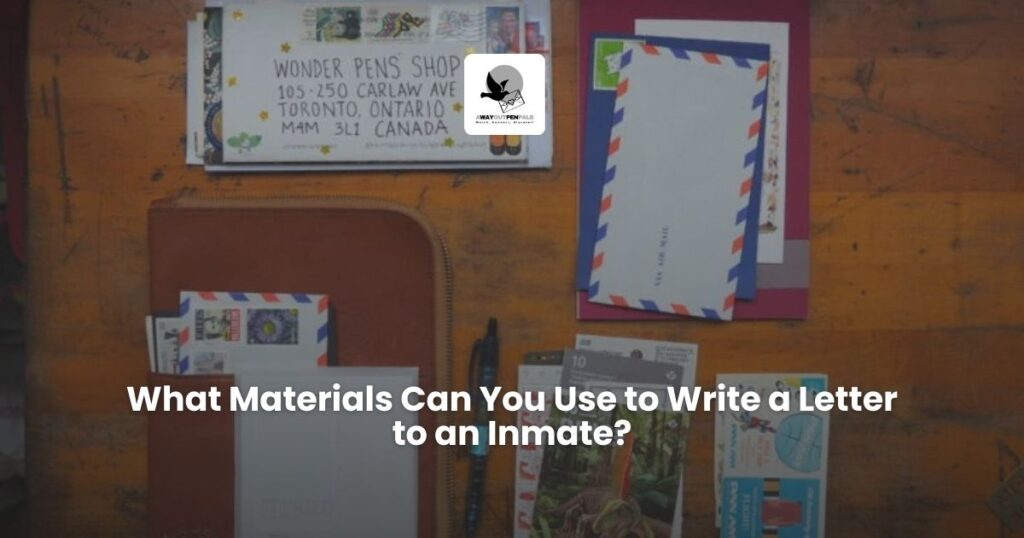
- Paper: Use plain white, lined or unlined paper. Do not use cardstock or heavy construction paper.
- Ink: Use black or blue ballpoint pen. Avoid markers, crayons, or glitter pens, as these can be used to hide contraband.
- No Extras: Do not include stickers, staples, paper clips, or tape.
- Scent and Fluid: Never spray perfume on a letter or use “lipstick kisses.” These are common ways people try to smuggle drugs (like soaked blotter paper) into prisons, and your letter will be destroyed immediately.
Writing to Inmates for the First Time: Tips for Success
Your first letter to an inmate sets the tone for the entire relationship. If you are using a pen pal service like A Way Out PenPals, you might be writing to a stranger.
How to Start a Letter to an Inmate
Keep your introduction simple and honest.
- “Hello [Name], my name is [Your Name], and I decided to reach out because I think everyone deserves a friend.”
- “I found your name through [Source], and I’m interested in hearing about your perspective on [Shared Interest].”
How Long Should a Letter to an Inmate Be?
For your first few letters, keep them between 1 and 3 pages. You don’t want to overwhelm them, and you also want to save some topics for future correspondence. How long a letter to an inmate should be ultimately depends on your relationship, but consistency is more important than length.
Use an Inmate Letter Template
If you are struggling with writers’ block, follow this simple structure:
- Greeting: A warm “Hello” or “Dear [Name].”
- The “Check-In”: Ask how they are doing and if they received your last letter.
- The News: Share 2-3 small updates from your life.
- The Encouragement: Offer a quote or a word of support.
- The Question: Ask them an open-ended question (e.g., “What is one thing you’re looking forward to this week?”).
- Closing: “Stay strong,” or “Thinking of you,” followed by your name.
Mistakes to Avoid When Writing to an Inmate
Beyond the content of the letter, there are behavioral prison pen pals letter tips that will protect your emotional well-being.
- Sending Money Too Early: If you are writing to a pen pal, wait several months before even considering sending money to their commissary. While many inmates are genuine, some may view new pen pals as a source of income.
- Making Promises You Can’t Keep: Don’t promise to visit or call if you aren’t sure you can. Disappointment hits much harder in prison.
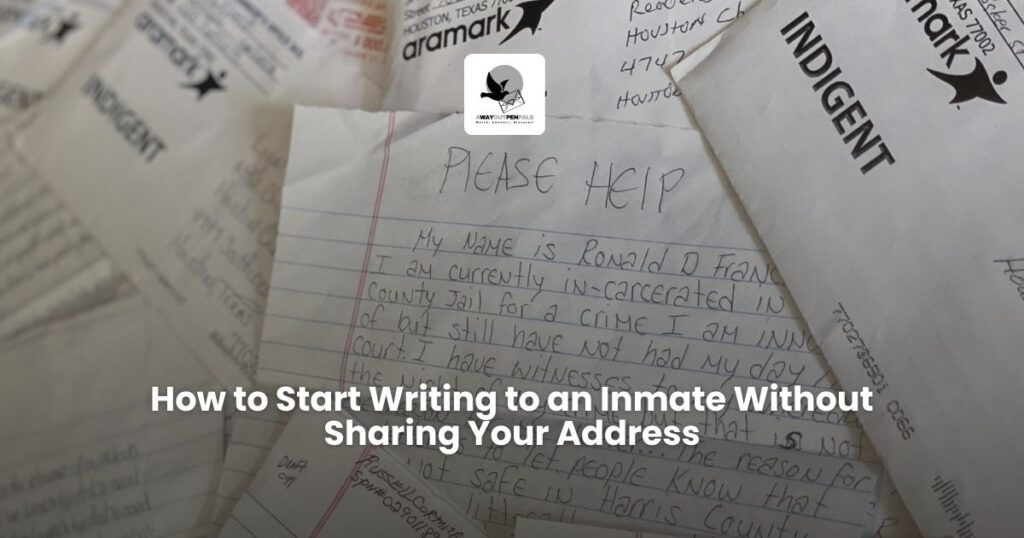
- Sharing Too Much Personal Info: Avoid sharing your home address (use a P.O. Box if possible), your workplace, or your specific daily routine until a deep trust is established.
- Being Inconsistent: If you start writing every week and then stop for a month, the inmate may worry that something happened to you or that you have given up on them.
Dr. Nicole Fleetwood’s research, specifically in her work “Posing in Prison,” discusses how loved ones and pen pals use things like letters and photos to maintain “carceral intimacy.” She highlights that this connection is a form of labor that takes a real emotional toll on the person on the outside. Understanding that this is “work” helps you realize why it’s okay to set boundaries for your own mental health.
How Do I Write a Letter of Support for an Inmate?
Sometimes, you aren’t just writing for friendship; you are writing a formal inmate support letter for a parole board or a judge. This requires a different tone.
Key Elements of a Formal Support Letter:
- Your Relationship: State how you know the person and for how long.
- Positive Traits: Highlight their character, work ethic, or personal growth.
- Housing/Employment: If you are offering them a place to live or a job upon release, state this clearly. This is highly valued by parole boards.
- Direct and Professional: Use a formal business letter format.
Summary of Prison Pen Pal Letter Tips
- Check the Rules: Every facility is different. Look up the specific prison’s website before you mail anything.
- Be Patient: Mail can take weeks to clear security. Do not panic if you don’t get a reply immediately.
- Keep it Positive: You are their link to the “good” side of life.
- Number Your Pages: If a guard drops your letter, they need to know how to put it back together.
- Include a Return Address on the Letter Itself: Sometimes envelopes get separated from the letter during the screening process.
Key Takeaways
- Security is Priority One: Never discuss crimes, staff, or use coded language.
- Simplicity is Best: Plain white paper, blue/black ink, and no stickers or scents.
- Encouragement Works: Focus on their future, their hobbies, and their growth.
- Consistency over Intensity: It is better to write a short letter every two weeks than a long one once a year.
- Boundaries are Healthy: Use a P.O. Box and be cautious with financial requests.
- Research Proves the Value: Your letters lower recidivism and improve mental health.
Final Word
Correspondence is a bridge. By learning how to write a letter to an inmate properly, you ensure that the bridge stays open and safe. Your willingness to reach out provides a light in a dark place and helps a fellow human being remember that they still have a place in the world.
While the rules may seem daunting at first, they quickly become second nature. The most important thing is that you start. Your first letter doesn’t have to be perfect; it just has to be sent.
Ready to make a difference in someone’s life today?
Connecting with an incarcerated pen pal can be one of the most rewarding experiences of your life. It challenges your perspectives and offers a unique opportunity for human connection.
Visit A Way Out PenPals to find a pen pal and start your first letter today!
Frequently Asked Questions
Why do your letters matter?
Letters act as a vital bridge to the real world, providing hope and a sense of belonging. Research shows that maintaining these social ties significantly reduces the likelihood of re-offending. In an environment where phone and video calls are often expensive, a letter is the most sustainable way to help someone stay connected and focused on their future.
Is it okay to share bad or stressful news?
It depends on your relationship. While you should avoid “dumping” stress they have no power to fix, many former inmates prefer the truth “straight like it is.” Honesty helps them feel respected and included in family life rather than being kept in the dark.
What are the most common reasons a letter gets rejected?
Rejections usually happen because of physical “contraband” rules. Avoid using markers, glitter, stickers, or staples. Never use perfume or lipstick, as these are major red flags for security. Stick to plain paper and standard blue or black ink.
Can I discuss the details of their legal case?
No. Prison mail is not private and does not have attorney-client privilege. Since staff read the mail, any details regarding a crime or legal strategy can be used as evidence and could negatively impact their case.
How long should my first letter be?
Keep it brief and meaningful. A few pages are enough to introduce yourself without being overwhelming. Remember, staying consistent with your writing is far more important than the length of any single letter.